
Emergency Drain Cleaning in Kyle, TX
Drain Cleaning Kyle answers the phone at three in the morning for the calls that genuinely cannot wait until Monday — and will tell you honestly when what you are describing can.
Call (737) 385-7666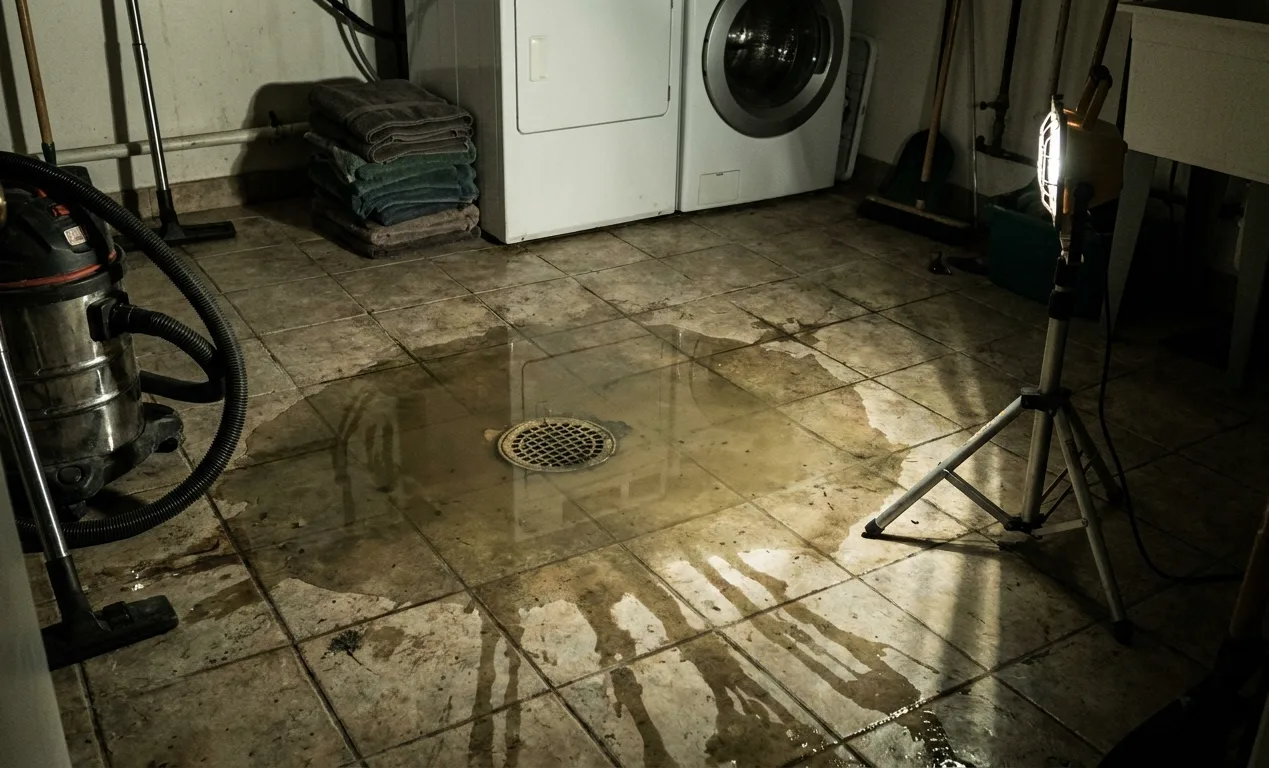
Do this first, before we get there
The minutes between the phone call and the van arriving are when most of the damage is either done or avoided. In order:
Stop putting water into the system
No flushing, no taps, no dishwasher, no washing machine. A main line that has stopped will hold whatever is already in it; every further gallon is a gallon that has to come out somewhere, and the lowest fixture in the house is where.
Warn the rest of the household
One person absent-mindedly flushing upstairs undoes everything else, and it is the single most common way a contained backup becomes a flooded hallway.
Keep people and pets out of the water
Sewage backup is a biological hazard, not just a mess. Boots if you must go in, and wash properly afterwards.
Move what you can lift
Rugs, cardboard boxes, anything with a fabric base. Furniture legs onto blocks or foil. Do not start mopping — knowing how far the water actually reached matters for the insurance claim.
Find the cleanout if you can do it safely
A capped pipe in the ground on the sewer side of the house. If waste is standing in it, that confirms the main line and saves us diagnostic time on arrival.
What counts as an emergency
We would rather be straight with you than sell a night call-out that a morning appointment would have covered.
Call now
Sewage coming up anywhere in the house. Every drain blocked at once. A toilet overflowing that will not stop. Waste surfacing in the yard over the line.
Call now if you cannot isolate it
One fixture overflowing where the shut-off is seized or missing. If you can stop the water going in, it becomes a morning job.
Morning is fine
A slow single sink. A bath that empties eventually. A smell with no backup. A gurgle you have noticed for a fortnight.
Not a drain call at all
Clean water spraying from a supply line is a burst pipe — shut the main off at the meter and call a plumber. We will say so rather than drive out and charge you to tell you.
Nights, weekends and holidays
Blockages do not distribute themselves evenly through the calendar. Thanksgiving and Christmas are the reliable peaks — a full house, a kitchen running all day, and a lot of fat going down a line that copes fine with two people. The other spike comes with the first serious rain after a dry spell, when groundwater pushes into cracked laterals and yard drains take everything the yard has been collecting.
The number is the same one at any hour. It is answered by somebody who can actually tell you what to do while you wait, not by an answering service taking a message for the morning.
One small thing, and it is the sort of advice nobody takes until the second time it happens: write the number on something that is not your phone. A card in the kitchen drawer, the inside of the cupboard door, wherever. When the power is out at two in the morning your phone is a torch first and a telephone second, and the battery goes accordingly.
After the water has gone
Clearing the blockage is the first half. What is left behind matters too, and it is worth doing properly:
- Photograph everything before you clean. Insurers ask, and memory is not evidence.
- Anything porous that took contaminated water — carpet pad, chipboard, cardboard — is generally not worth saving.
- Hard surfaces wash down and disinfect fine.
- Get air moving. Fans and a dehumidifier for a few days; Central Texas humidity does not dry a room out on its own.
- Have the line camera-surveyed once it is running again, so you know whether this was a one-off or the first of several.
Where the shut-offs are in a Texas slab house
Almost every house here sits on a slab, so there is no basement and none of the shut-offs are where a guide written elsewhere will tell you to look. Worth finding these on a calm afternoon rather than at midnight:
- The whole house — at the meter box near the kerb, under a lid you may need to lever up. The valve usually needs a meter key or a long-handled wrench, not fingers. Some houses also have a second shut-off where the supply enters, typically on an outside wall near a hose bib.
- A single toilet — the small oval handle on the wall behind and below the cistern. Turn it clockwise.
- A basin or sink — the two angle stops in the cabinet underneath, one hot, one cold.
- The washing machine — the pair of valves in the recessed box behind it. These are the ones most often seized from never being turned.
- The water heater — the valve on the cold inlet at the top of the unit, which is often in a garage or a hall cupboard here rather than in a basement.
One thing worth being clear about, because it catches people out at the worst moment: shutting the water off does not stop a sewer backup. The water already in the drains still has to go somewhere, and a blocked main will keep pushing it up at the lowest opening. What stops a backup getting worse is stopping water use — no flushing, no taps, no appliances. Closing the main valve is the right move for a burst supply pipe, which is a different emergency entirely.
Frequently asked questions
Can I use the toilet at all while I wait?
If the backup is in the main line, no — every flush adds several gallons that will surface at the lowest drain in the house. If only one fixture is affected and the rest of the house is draining normally, the others are fine to use.
How quickly can you get to me?
Response depends on where you are and what is already running, but Kyle, Buda and San Marcos are the core of the patch and are usually quick. You get a realistic time on the phone, not an optimistic one.
Is there a call-out charge at night?
Out-of-hours work is priced above a daytime appointment. You are told the figure on the phone before anybody sets off.
Sewage is coming up in the shower. What is happening?
The main line is blocked and your shower is the lowest opening in the system, so it is where the waste finds its level. Stop all water use and call.
Should I keep flushing to push it through?
No. That is the one action that reliably turns a contained problem into a flooded floor.